
Walk into any hardware store or browse online, and you’ll find dozens of water treatment products claiming to be exactly what your home needs. RO systems, UV purifiers, sediment filters, water softeners, activated carbon units- the list keeps growing, and so does the confusion. Most homeowners don’t actually know which product solves which problem, so they either overspend on equipment they don’t need or underinvest in something that leaves the real issue untouched.
A reliable water treatment solutions company doesn’t start with a product. It starts with your water. That distinction matters more than most people realize, and it’s the foundation this guide is built on.
Why Product Recommendations Should Never Come First
The biggest mistake in water treatment isn’t picking the wrong brand; it’s picking a product before understanding what’s actually in the water. Hard water needs a different solution than water with high turbidity. Water with microbial contamination needs a different approach than water with excess dissolved salts. Treating all of these the same way is like prescribing the same medicine for every illness.
This is why any recommendation worth trusting begins with a water quality assessment, not a product catalog. Once you know what you’re dealing with, the right products become obvious rather than guessed at.
Reading Your Water Before Choosing a Solution
Before recommending anything, a good water treatment solutions company looks at a few key indicators:
Hardness. Calcium and magnesium levels that cause scaling in pipes, appliances, and geysers.
Turbidity. Visible cloudiness or suspended particles, often from sediment or rust in the supply line.
Total Dissolved Solids (TDS). A measure of dissolved minerals and salts that affects taste and long-term appliance health.
Microbial contamination. Bacteria or pathogens that require disinfection rather than filtration alone.
Source type. Borewell water, municipal supply, and tanker-fed water each carry different risk profiles.
Skipping this step is the single most common reason homeowners end up disappointed with a system that “should have worked” but didn’t address their actual water condition.
The Core Water Treatment Products Worth Understanding
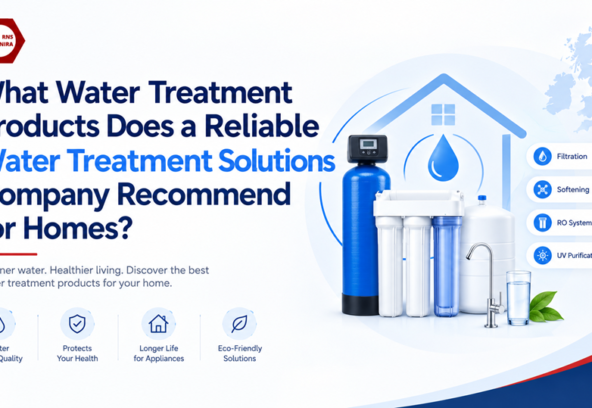
Once your water profile is clear, here’s how the major product categories actually differ in what they solve.
Sediment and Pre-Filters
These handle visible impurities like sand, rust flakes, and larger particles. They’re rarely a complete solution on their own, but they protect downstream equipment like RO membranes and softeners from premature wear. Skipping this stage is one of the fastest ways to shorten the lifespan of a more expensive system.
RO (Reverse Osmosis) Systems
Best suited for water with high TDS or dissolved salts. RO systems work by forcing water through a semi-permeable membrane, removing a wide range of dissolved impurities. They’re commonly recommended for borewell water or regions with naturally mineral-heavy supply. One trade-off worth knowing: RO systems also strip out beneficial minerals, so many modern units pair filtration with a mineral cartridge to balance taste and nutrition.
UV Purifiers
Designed specifically for microbial safety, not for removing dissolved solids or sediment. UV works by neutralizing bacteria and viruses using ultraviolet light. It’s an excellent addition for municipal supply that’s biologically unsafe but doesn’t have high TDS, and it’s often paired with a sediment filter rather than used alone.
Water Softeners
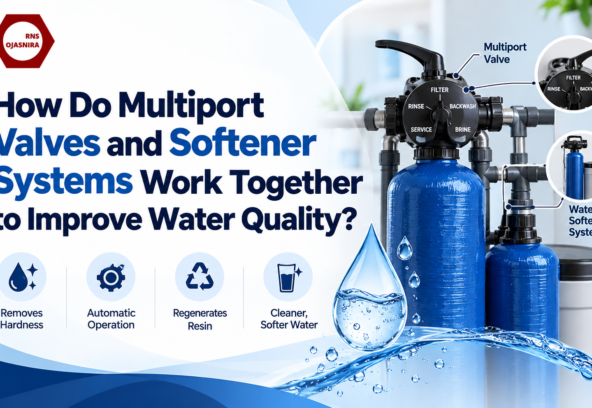
Built to address hardness, not purity. A softener exchanges calcium and magnesium ions for sodium ions, reducing scale buildup in pipes and appliances. Homes with visible white scaling on taps or reduced geyser efficiency usually benefit most from this category.
Multiport and Multi-Grade Filtration Valves
Often overlooked in consumer guides, these control how water flows through a filtration media bed, allowing backwashing and multi-stage filtration without manual intervention. For homes using sand or carbon media filters at a whole-house level, this component determines how efficiently the system actually performs over time.
A Practical Framework for Choosing the Right Combination
Instead of picking one product, think in terms of a treatment stack tailored to your water report:
- Start with sediment filtration to protect every stage downstream.
- Address the primary contamination type, whether that’s TDS, hardness, or microbial safety.
- Add a secondary stage if your water carries more than one issue, which is common with borewell sources.
- Choose components rated for your household’s daily water consumption, not just tank capacity.
This layered approach consistently outperforms single-product solutions because real household water rarely has just one problem.
Common Mistakes Homeowners Make When Choosing Treatment Products
- Buying an RO system for water that only has microbial contamination, not high TDS
- Skipping pre-filtration and shortening the life of expensive equipment
- Assuming softened water is automatically safe to drink without further treatment
- Choosing capacity based on tank size instead of actual daily usage
- Ignoring maintenance requirements until performance visibly drops
Avoiding these mistakes alone can significantly improve both water quality and equipment lifespan, regardless of which brand you choose.
Final Thoughts
The right water treatment products aren’t the ones with the most features or the biggest price tag; they’re the ones matched to what your water actually needs. Start with an honest read of your water quality, understand what each product category is actually designed to solve, and build a layered system rather than relying on a single device to do everything.
If you’d rather skip the trial and error and get a recommendation based on your specific water source and household needs, RNS Ojasnira works with homeowners to assess water quality and recommend treatment systems built around real data rather than guesswork. A well-matched system today saves you from replacing the wrong one later.