
Here’s a pattern a lot of people will recognize. A sand or carbon filter works well for months. Then the pressure gauge starts creeping up, the flow at the taps gets weaker, and the pump sounds like it’s working harder. The first instinct is to blame the pump or the filter media. Before spending money, though, it’s worth looking at the part that’s easiest to overlook: the multiport valve.
In many water filtration systems built around a media tank, this valve decides whether the system is filtering, cleaning itself, or rinsing. Once you understand it, performance problems are easier to spot and maintenance stops being a guessing game.
What the valve actually controls
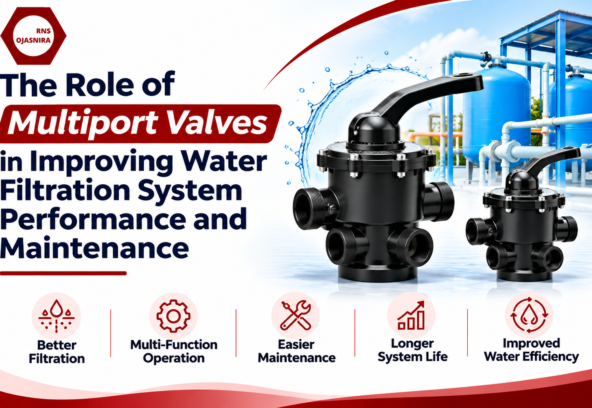
A multiport valve is a single control point with several settings. Turn the handle and water takes a different path through the tank. The valve doesn’t filter anything itself. The media inside the tank does that, whether it’s sand, activated carbon, or a layered mix. The valve simply lets one tank do three different jobs without anyone rebuilding the plumbing.
A walk through the positions
Names vary by model, but these are the common ones:
- Filter: Water flows down through the media and out clean. This is normal operation.
- Backwash: Flow reverses and moves upward, loosening the bed and flushing trapped dirt out to drain.
- Rinse: Water runs downward at speed to resettle the media and wash out leftover debris before you return to service.
- Waste or drain: On valves that have it, water goes straight to drain without passing through the media.
- Closed: Flow stops.
One rule is worth following every time: switch off the pump before turning the handle. Changing positions under pressure can damage the internal gasket.
Why backwashing keeps performance steady
As a filter works, it collects particles. That’s its job, but a loaded bed resists flow. You’ll usually see the pressure gauge climb and the flow at the outlet drop. Backwashing flushes the dirt out so the bed can work properly again.
How often depends on how dirty the source water is and how much you use. In rainy months, for example, source water often carries more silt, so you may need to backwash more frequently than usual. Rather than relying only on a calendar, note the gauge reading when the filter is clean and follow your manufacturer’s guidance on how much of a rise means it’s time. If your valve has a sight glass, keep backwashing until the water running through it looks clear.
A simple backwash routine
- Switch off the pump.
- Turn the handle to backwash.
- Start the pump and run until the water clears.
- Switch off the pump and turn the handle to rinse.
- Run the rinse for the time your manufacturer suggests, then switch off, return to filter, and restart.
Keeping the valve itself healthy
The valve gets far less attention than the tank, but a few habits go a long way.
- Turn the pump off before every position change.
- Operate the valve every so often so gaskets don’t stick in place.
- Lubricate o-rings and seals with a product your manufacturer recommends. Many specify silicone-based lubricants, since some greases can damage rubber.
- Watch for cracks, weeping at joints, and a handle that has gone stiff.
- Replace worn gaskets early. They cost little compared with the problems they cause.
Reading the symptoms
A few common signs and what they often mean:
- Water keeps running to drain in the filter position: Often a worn gasket or a valve that isn’t fully seated.
- Pressure rises quickly after backwashing: The backwash may have been too short, the bed may be compacted, or the media may be near the end of its life.
- Dirty water after rinsing: The rinse may have been too short, or there could be a problem inside the tank.
- Leak at the handle or body: Check seals first, then look for cracks.
These point you toward a likely cause. A technician or your manufacturer can confirm it.
Manual or automatic?
Manual multiport valves are simple, affordable, and easy to repair, but they depend on someone remembering to backwash. Automatic valves run cycles on a timer, which helps at unattended sites, but they cost more and add electronics to maintain. For a household or small site where someone checks regularly, manual is often enough. If nobody is around to watch the gauge, automation earns its price.
What the valve can’t fix
Backwashing removes particles. It does nothing for dissolved contaminants, and it can’t rescue media that has reached the end of its useful life. Activated carbon, for instance, eventually stops working well no matter how often you backwash it. If problems return quickly after a backwash, test the water and inspect the media rather than backwashing more often.
Putting it to use
A multiport valve is a small part with a big effect on how well your water filtration system performs. Know the positions, watch your pressure gauge, turn off the pump before changing settings, and keep the gaskets in good shape. Most problems get much easier to diagnose once you do.
If you need help choosing or replacing a valve for your setup, RNS Ojasnira can point you toward options that fit your tank and usage.