
Picture a plant where the filters, softeners, and membranes are all working well, yet the line keeps stopping. A valve sticks, a seal weeps, or a backwash cycle never finishes. Production waits, maintenance scrambles, and the cheapest part of the system becomes the most expensive problem.
This is why valves deserve the same attention as pumps and tanks when you design or upgrade industrial water treatment systems. And if you buy from overseas, the supplier matters as much as the product. A good water treatment valve exporter India that buyers can rely on should help you match the right valve to your water, your process, and your paperwork.
This guide explains what valves do, which types suit which jobs, and how to judge an exporter before you place an order. It is written for engineers, plant owners, system integrators, and procurement teams, and it keeps the jargon light.
What Do Valves Do in Industrial Water Treatment Systems?
A valve in a water treatment system controls, isolates, or directs the flow of water between treatment stages. In simple terms, it decides where the water goes, when it goes there, and when it stops.
Valves in these systems usually do one or more of these jobs:
- Isolate a section so it can be repaired without shutting everything down
- Regulate flow or pressure to keep equipment within safe limits
- Direct water through different stages, such as service, backwash, and rinse
- Prevent backflow so treated water does not return to the wrong place
- Dose and control chemicals accurately
How an Industrial Water Treatment System Works, and Where Valves Sit
A typical system moves water through several stages. The exact design depends on your source water and the quality you need.
- Pretreatment: screening, coagulation, settling, or similar steps to remove larger solids. Isolation and control valves manage flow.
- Filtration: sand, multimedia, or carbon filters remove suspended solids and organics. Filtration valves manage service and backwash cycles.
- Softening: ion exchange resin removes hardness minerals. Softener valves run service, brine draw, rinse, and refill.
- Membrane treatment: ultrafiltration or reverse osmosis refines the water. Valves protect membranes with careful pressure and flow control.
- Disinfection and dosing: chlorine, UV, or other treatment is applied. Chemical-resistant valves matter here.
- Storage and distribution: tanks, pumps, and level control keep supply steady.
- Effluent treatment: wastewater is treated before reuse or discharge, often with corrosive or abrasive flows.
At every step, the valve is a point where leaks, wear, or poor control can start.
Which Valves Are Used, and What Is Each Best For?
| Valve type | Typical use | Common materials | What to watch |
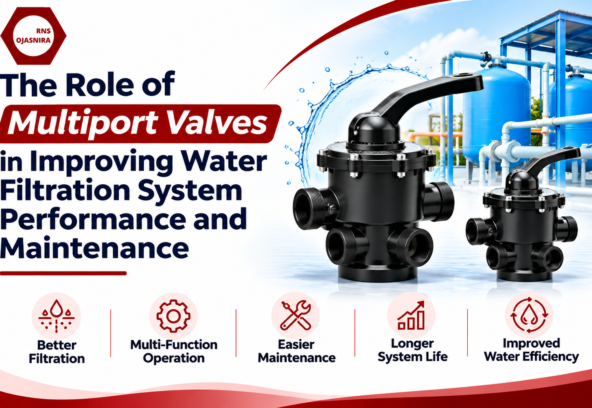
| Multiport (filtration and softening) valves | Automating service, backwash, brine, and rinse cycles | Engineered plastics, with seals matched to the water | Correct flow rating, tank thread, and control type |
| Ball valves | Simple on and off isolation | Stainless steel, brass, PVC, CPVC | Seat and seal compatibility with chemicals |
| Butterfly valves | Isolation and throttling on larger pipes | Cast iron, ductile iron, stainless steel | Seat wear and correct sizing |
| Diaphragm valves | Chemical dosing, slurries, dirty liquids | Plastics and lined bodies | Diaphragm material and cycle life |
| Check (non-return) valves | Preventing backflow and protecting pumps | Stainless steel, plastics, cast iron | Cracking pressure and seat condition |
| Solenoid and control valves | Automated switching and regulation | Brass, stainless steel, plastics | Coil voltage and media compatibility |
| Water level regulators | Controlling tank filling and pump protection | Varies by design | Correct level settings and testing |
Materials and ratings vary by product, so always confirm them against the datasheet for the exact model.
Why Valve Quality Matters More Than Price
A low price can hide costs that appear later:
- Unplanned downtime when a valve fails mid-cycle
- Water and chemical waste from leaks or incomplete regeneration
- Damage to expensive equipment, such as membranes and pumps
- Water quality problems if softened and hard water mix
- Repeated maintenance and spare part orders
In many plants, the better question is not “What does this valve cost?” but “What does it cost if this valve fails?”
Industry Examples: Same Problem, Different Priorities
Food and beverage and pharmaceutical units need clean, consistent water and materials that suit hygienic processes. Seal quality and cleanability become priorities.
Textile and dyeing units use large volumes of water, often with hardness issues. Reliable softening cycles protect product quality and machinery.
Power and boiler systems rely on softened feed water. A failing softener valve can let hardness through and cause scale.
Hotels, hospitals, and large residential complexes need steady supply and low maintenance, since many users depend on one system.
Chemical and metal processing units often handle aggressive liquids, so material compatibility decides valve life.
Benefits of Getting Valves Right
When valves are chosen and installed well, the whole system benefits:
- Steady water quality, because treatment cycles complete properly
- Lower maintenance, since fewer parts leak, stick, or wear early
- Better protection for pumps and membranes through correct flow and pressure control
- Easier automation, especially with multiport valves that run several cycles from one unit
- More predictable running costs, with fewer emergency repairs and shutdowns
Common Challenges Buyers Face
Even experienced teams run into the same problems:
- Unclear water data. Without a recent water analysis, material choice becomes guesswork.
- Mismatched connections. Thread types, flange standards, and pipe sizes differ between countries and manufacturers.
- Hard water and scale. Mineral build-up can jam moving parts if maintenance is ignored.
- Chemical exposure. Chlorine, acids, and dosing chemicals can attack the wrong seal material.
- Distance and delays. Overseas orders need clear specifications, because corrections cost time.
Knowing these in advance helps you ask better questions and write a better purchase specification.
Matching Materials to Your Water Conditions
Material choice is where many valve problems begin. Use this as a starting guide, then confirm with the supplier and your own data.
- Hard water with scale: choose valves designed for regular regeneration and easy servicing, and plan routine cleaning.
- Water with chlorides or brackish sources: higher stainless steel grades or suitable plastics resist corrosion better than basic metals.
- Dosing chemicals: look for chemical-resistant bodies and seals, and check compatibility charts for each chemical.
- High temperature lines: confirm the temperature rating of both the body and the seals, since seals are often the weakest point.
- Water with sand or sediment: consider valves and filtration arrangements that cope with abrasive particles.
If you are unsure, ask the supplier which seal and body materials they recommend for your exact conditions, and why.
What Makes a Water Treatment Valve Exporter India Buyers Can Trust?
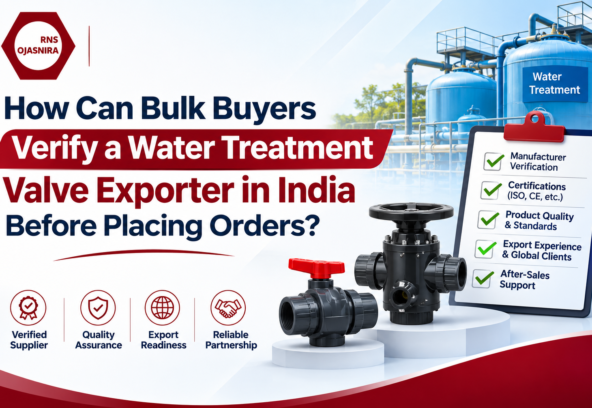
Use this checklist when you evaluate suppliers:
- Manufacturing capability: Does the company make its own products, or only trade them? Manufacturers can usually answer technical questions in more depth.
- Quality system: Ask for current quality certificates, such as ISO 9001, and check that the scope covers the products you want.
- Testing: Ask how valves are tested before dispatch, for example, for leaks and operation.
- Material information: Ask for body, seal, and wetted material details, and test certificates where your project requires them.
- Range and customisation: Can they supply multiport, softening, and level control components, and adapt to your system?
- Documentation: Look for clear datasheets, drawings, and operating instructions.
- Export readiness: Check their experience with packing, shipping documents, and communication across time zones.
- After-sales support: Confirm spare parts availability and technical help when something goes wrong.
Questions to Ask, and What a Good Answer Sounds Like
| Question | A good answer | Red flag |
| Which materials suit my water? | Asks about chemistry, temperature, and pressure first | Quotes a price without asking |
| How do you test products? | Describes specific checks and records | Says “all products are tested” with no detail |
| Can I see certificates? | Shares current documents with scope | Avoids or sends outdated copies |
| What are the lead times and packing? | Gives realistic timelines and packing details | Promises very short times with no plan |
| What if a part fails? | Explains warranty and spare supply | Vague or silent on after-sales |
How to Match a Valve to Your System in Six Steps
- Describe the water: source, hardness, chlorides, iron, pH, and any chemicals.
- Define operating conditions: flow rate, pressure, and temperature.
- Choose the control method: manual or automatic, and timer- or meter-based for softeners.
- Confirm connections and sizes: pipe, tank threads, and flange types.
- Check standards and documents your market or project requires.
- Request samples or references for critical applications, and test before bulk orders.
A Simple Maintenance Routine That Extends Valve Life
Good valves still need care. A basic routine can prevent most failures:
- Weekly: look for leaks, drips, or unusual noise during cycles.
- Monthly: check that valves open, close, and regenerate on schedule, and confirm settings have not drifted.
- Quarterly: inspect seals, injectors, and strainers, and clean any scale or debris.
- Yearly: review water quality, replace worn seals, and test level control and dry run protection.
- Always: record faults and repairs, so patterns become visible.
Keep a small stock of seals and other wear parts, so a minor fault never becomes a long shutdown.
Expert Tips
- Share your water analysis with the supplier. It prevents the most expensive material mistakes.
- Order a small trial batch before committing to a large one.
- Keep a short list of critical spares on site.
- Pair valves with level control and dry run protection to protect pumps.
- Write down your acceptance criteria before shipment, so inspection is simple.
Common Mistakes to Avoid
Choosing by price alone. Failure costs more than the savings.
Ignoring water chemistry. Chlorides, chemicals, and heat can destroy the wrong material.
Skipping documentation. Missing paperwork can delay customs and projects.
Oversizing or undersizing. Both cause poor performance.
Forgetting maintenance. Even good valves need inspection.
About RNS Ojasnira
RNS Ojasnira is based in IMT Bawal, Rewari, Haryana. According to its website, it manufactures and supplies quality components for water treatment, level regulation, and protection, including filtration and softening valves, multiport valves, level regulators, and dry run protection components, for residential, commercial, and industrial use. It serves OEMs and accepts import enquiries from international partners. The company also supplies Crompton pressure pumps and Crompton and Lubi pump floaty solutions.
Frequently Asked Questions
What is a water treatment valve exporter?
A water treatment valve exporter is a company that supplies valves and related components for water treatment systems to customers in other countries. A good exporter also supports documentation, packing, and technical queries.
Which valves are used in industrial water treatment systems?
Common types include multiport filtration and softening valves, ball valves, butterfly valves, diaphragm valves, check valves, solenoid valves, and level control devices. The right choice depends on the stage, the water, and the operating conditions.
How can I verify an exporter in India?
Ask for current quality certificates and check their scope. Request product datasheets and test information, look for a real manufacturing address, and ask for references or samples. Compare answers from more than one supplier.
Which valve material is best for water treatment?
There is no single best material. Stainless steel suits many clean-water and process uses, with higher grades often preferred where chlorides are present. Plastics such as PVC or CPVC are common for chemicals at moderate temperatures. Always match the material and seals to your water analysis.
What documents are usually needed when importing valves from India?
Typically, a commercial invoice, packing list, and transport document, plus a certificate of origin and any test certificates required. Rules differ by country, so check with your customs broker.
Conclusion: Choose the Valve, Then the Partner
Industrial water treatment systems depend on small components doing their jobs every day. Match valve types to each stage, choose materials based on your water, and judge a water treatment valve exporter on testing, documentation, and support, not only on price.
Your next step is simple: write down your water analysis, flow, pressure, and process needs, then use the questions above to compare suppliers. If you would like to discuss your project, you can contact the team at RNS Ojasnira.

Comments
How to Verify a Water Treatment Valve Exporter in India
November 27, 2026[…] the money you saved. For anyone sourcing parts for industrial water treatment systems, choosing a water treatment valve exporter India is a risk decision as much as a buying […]